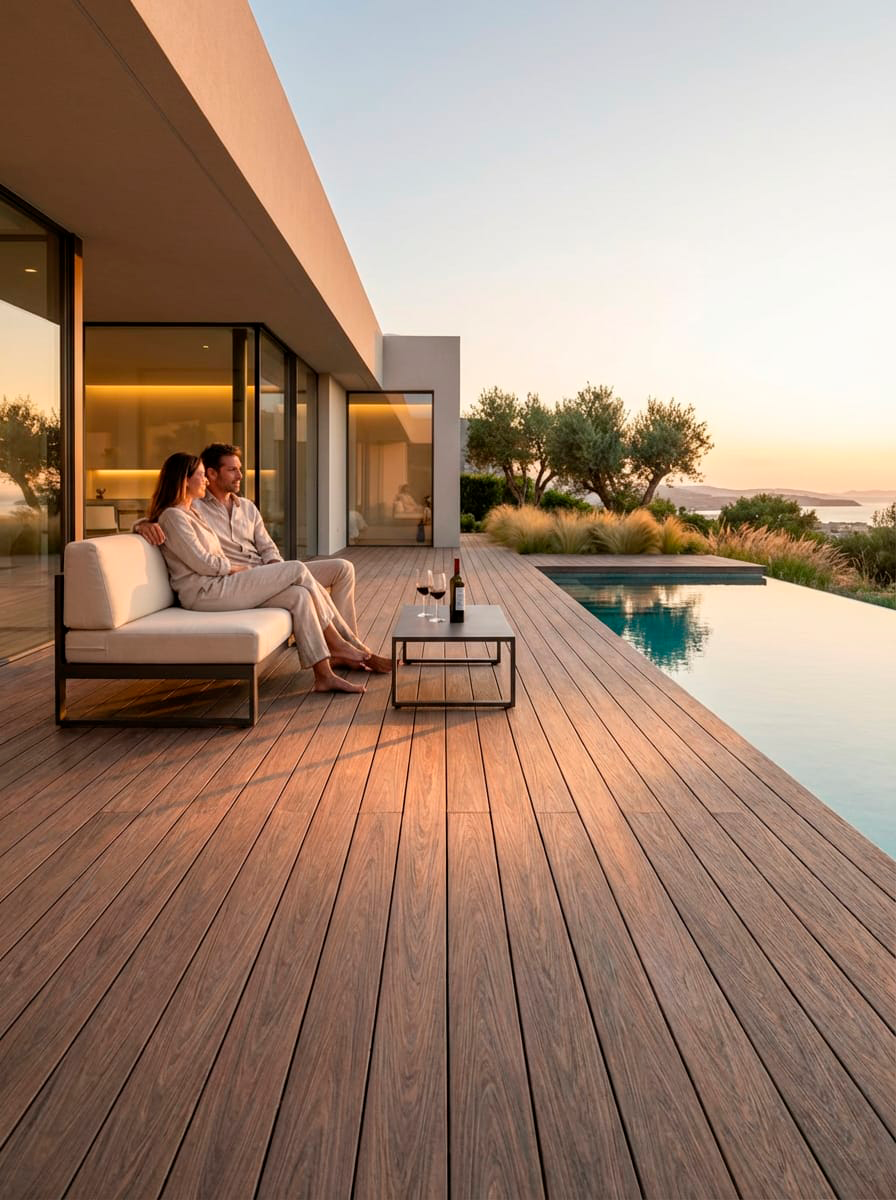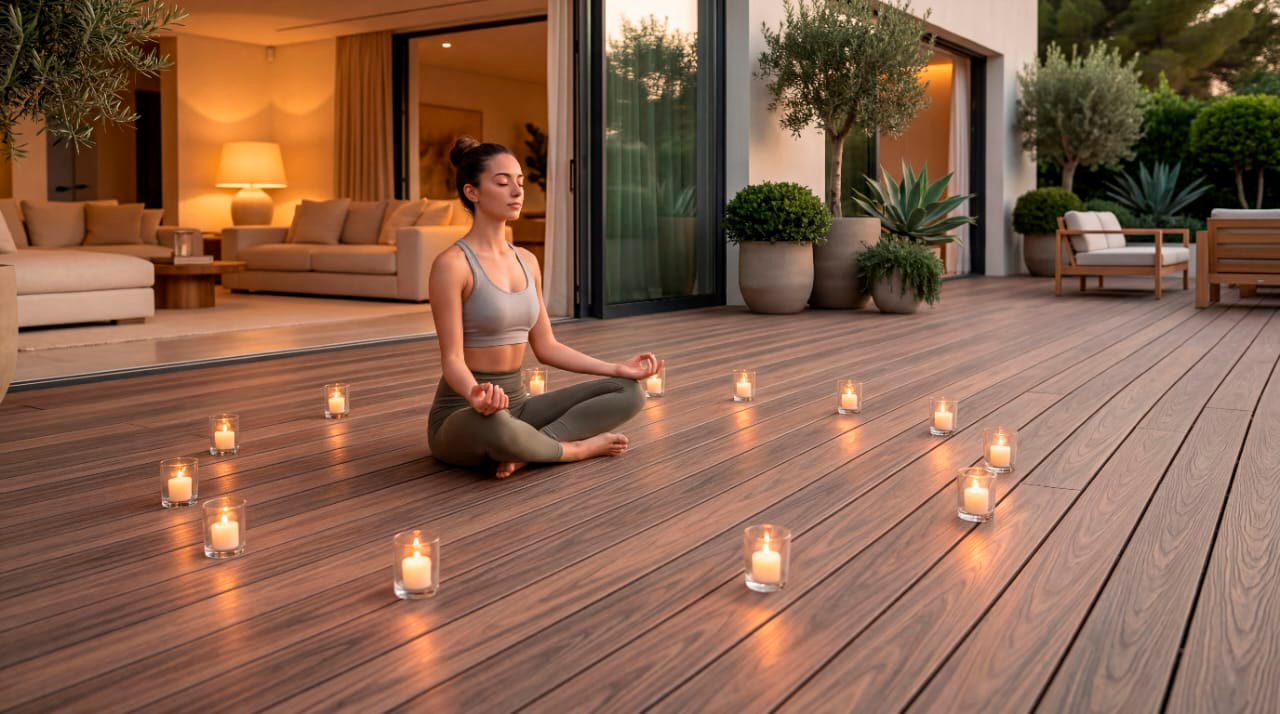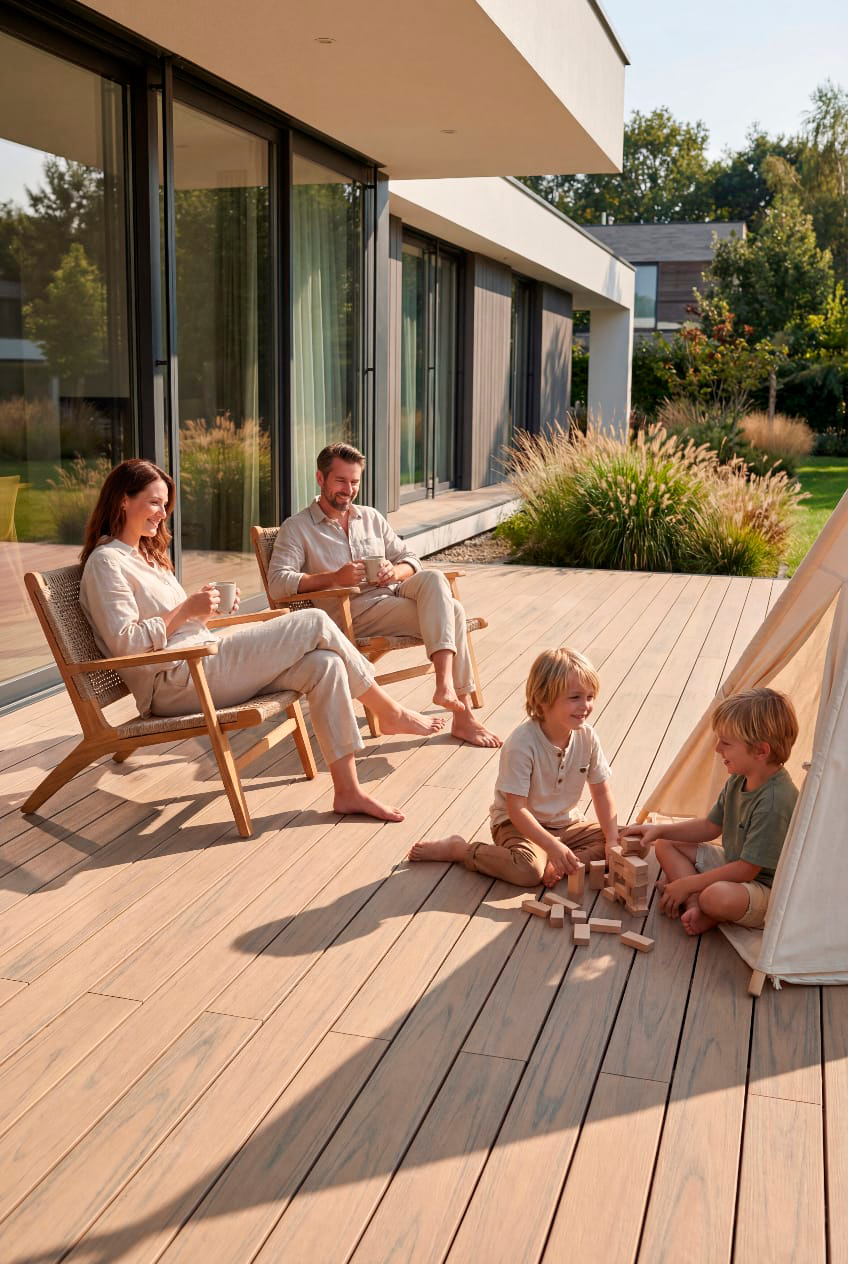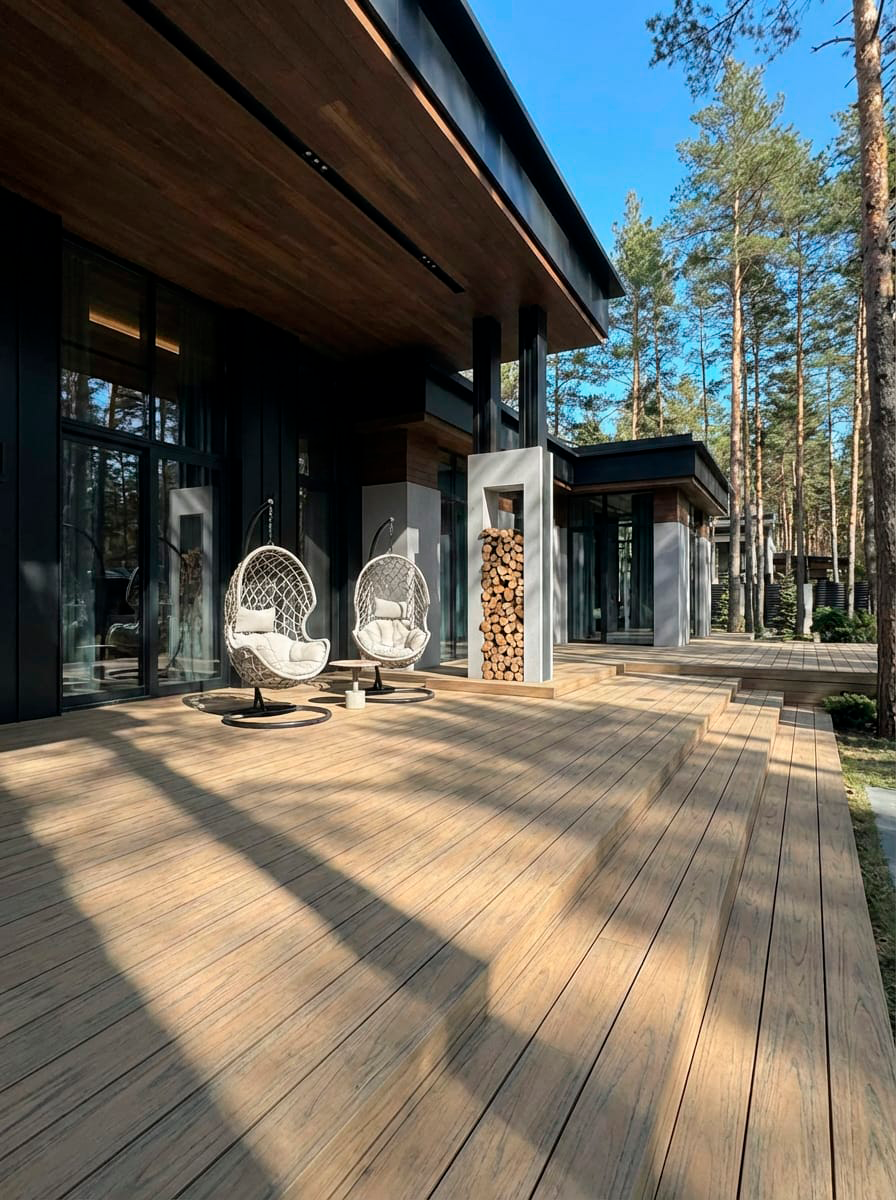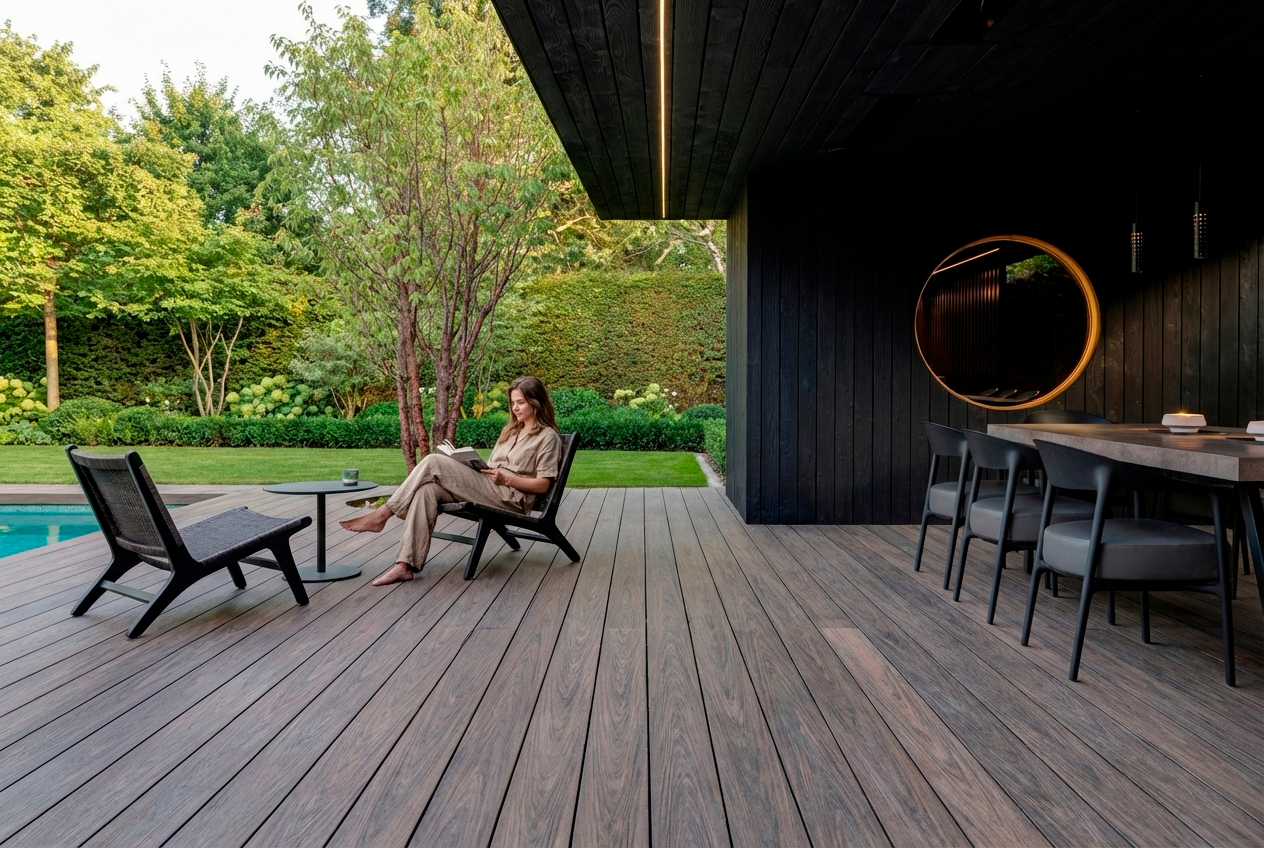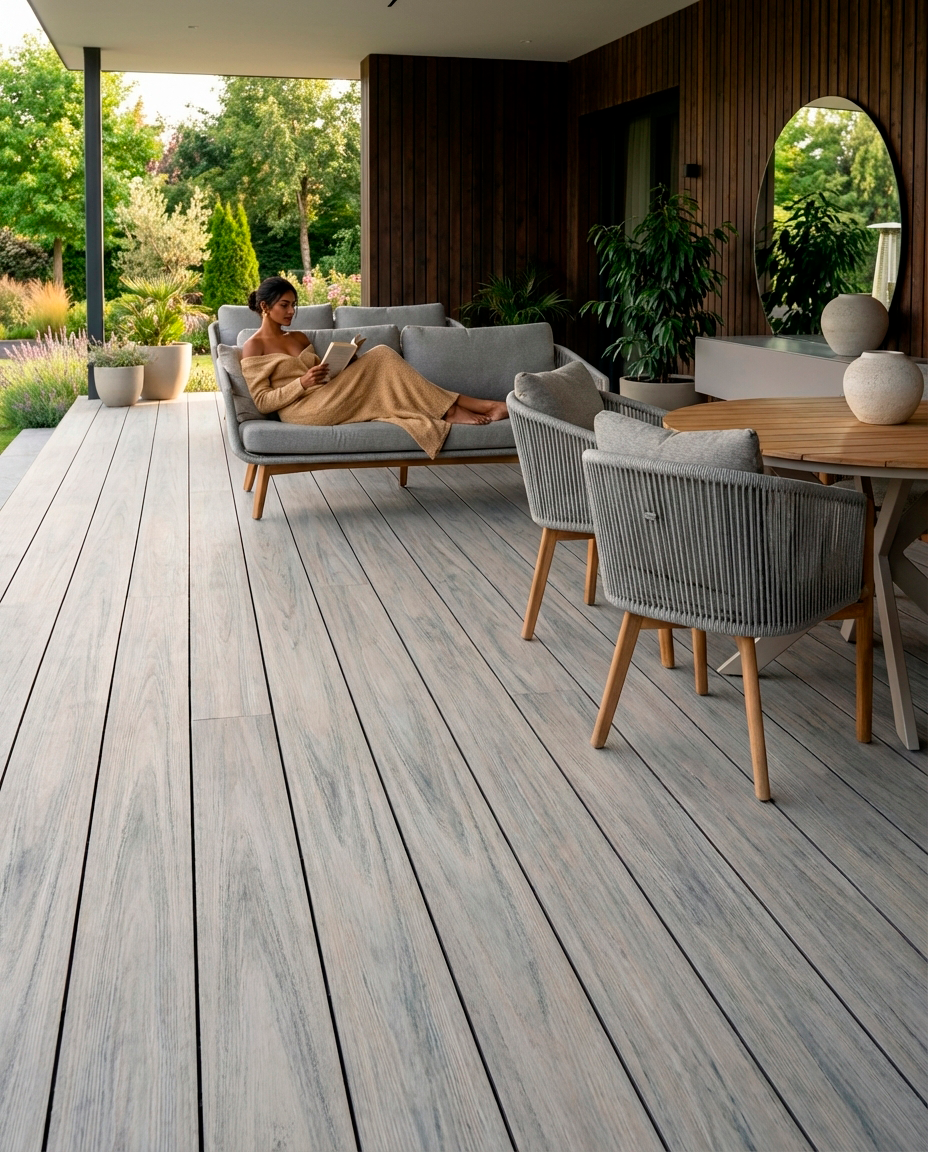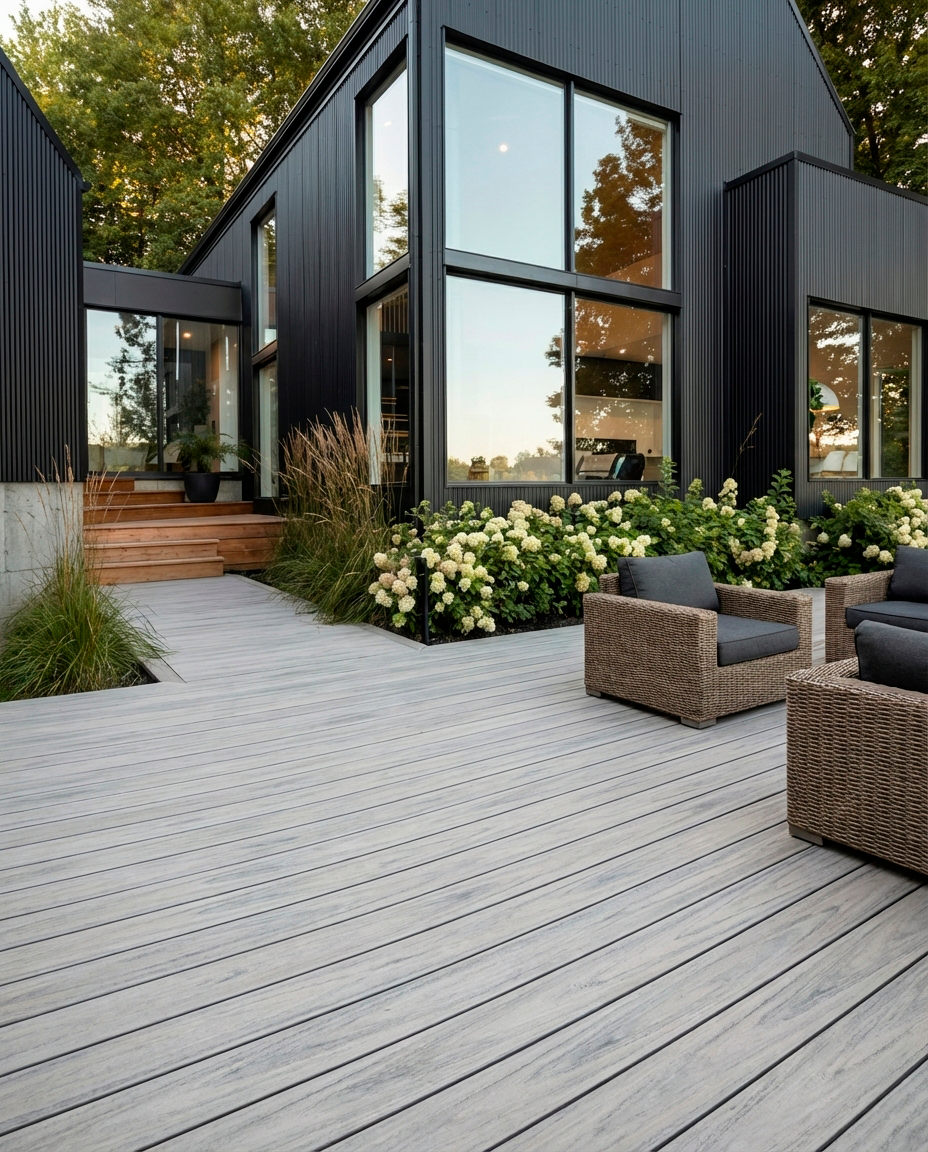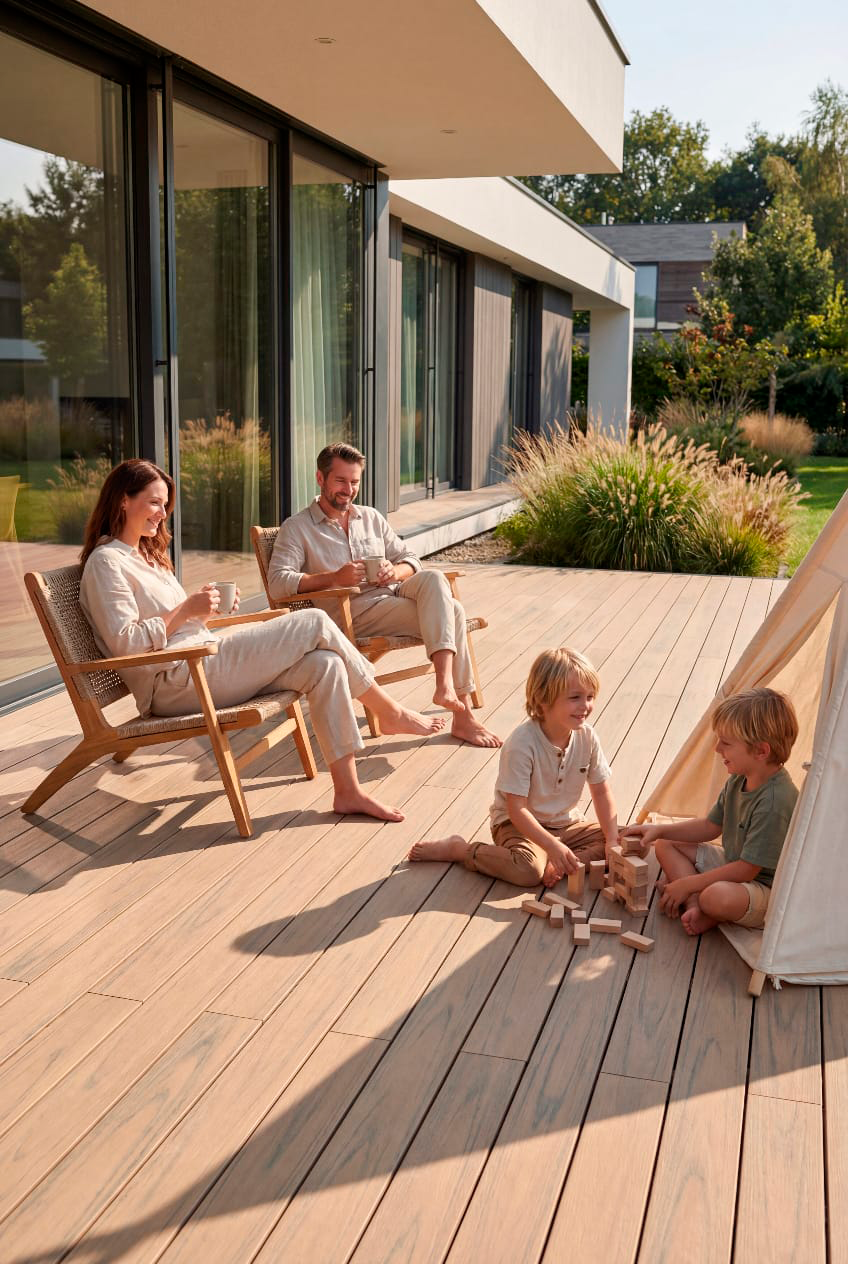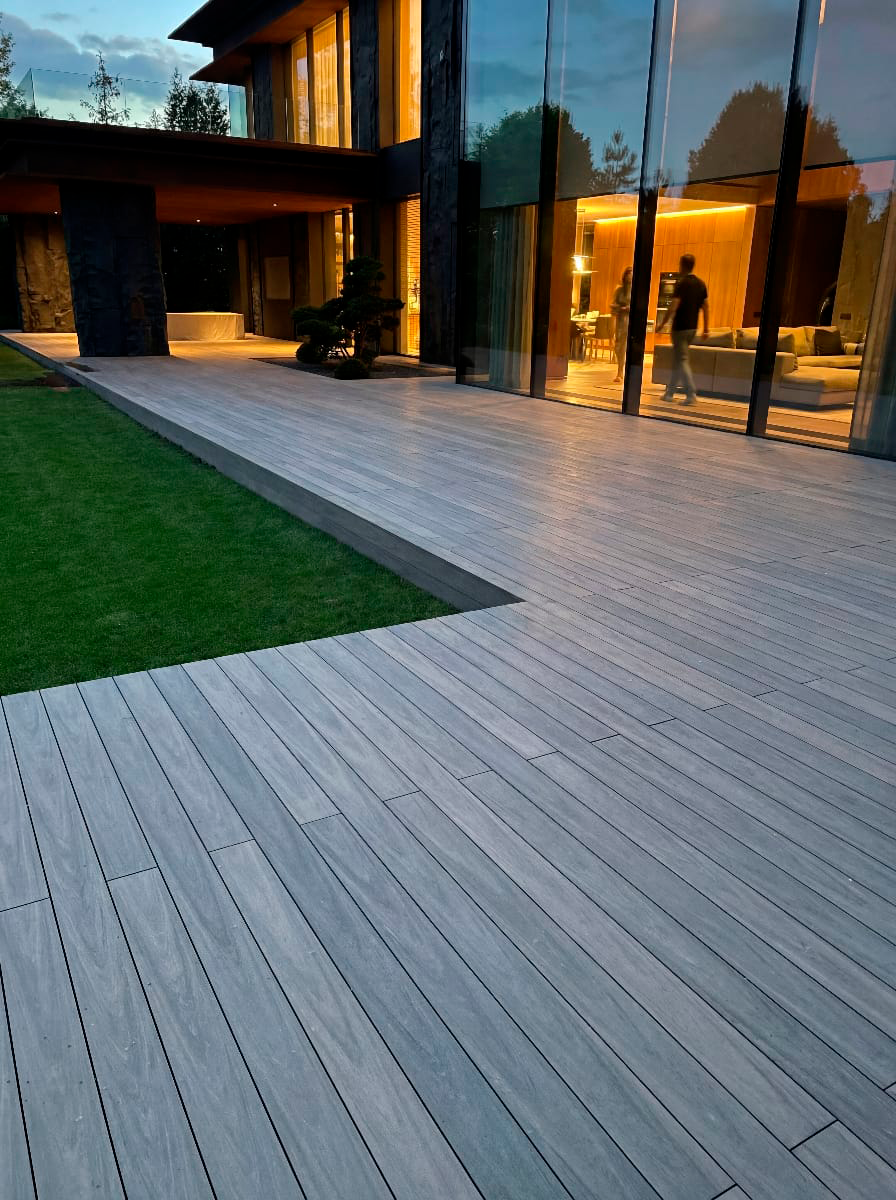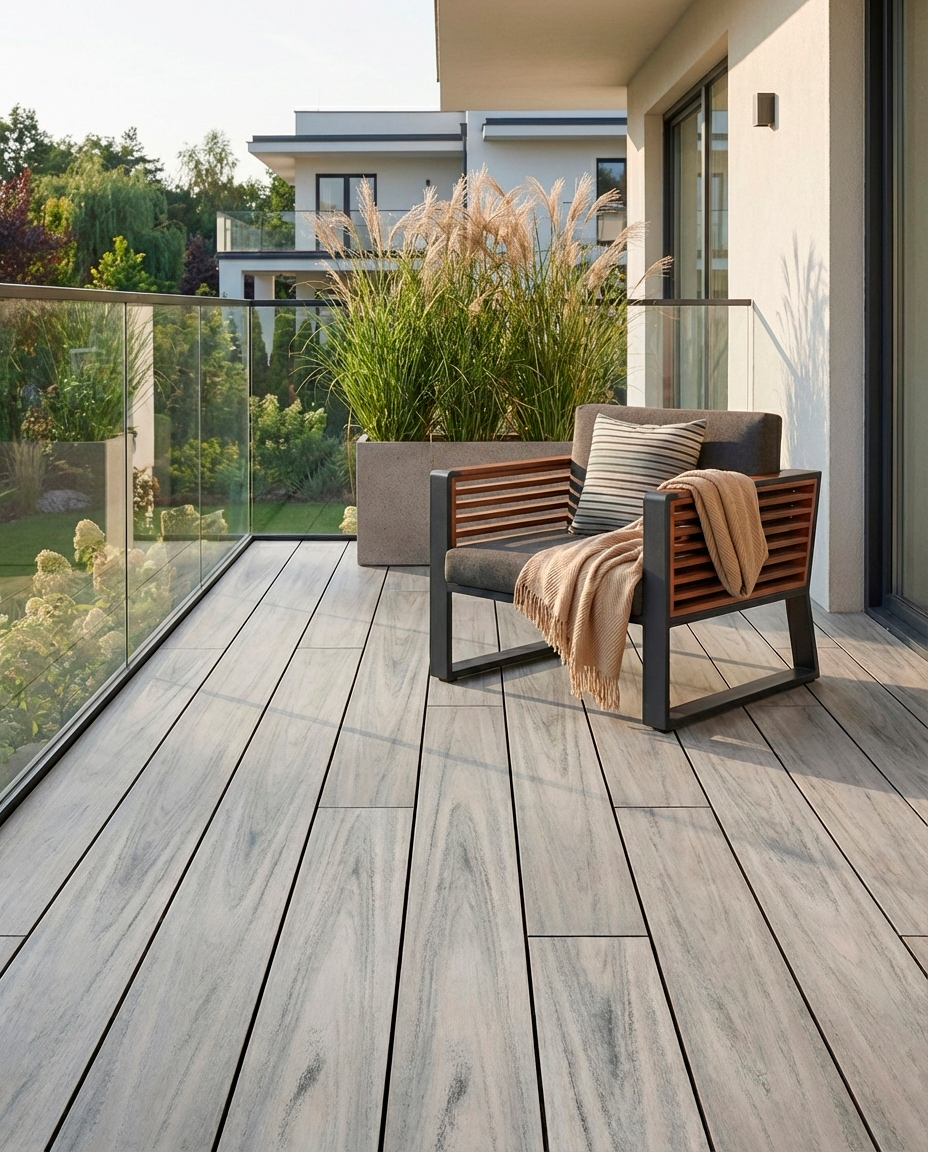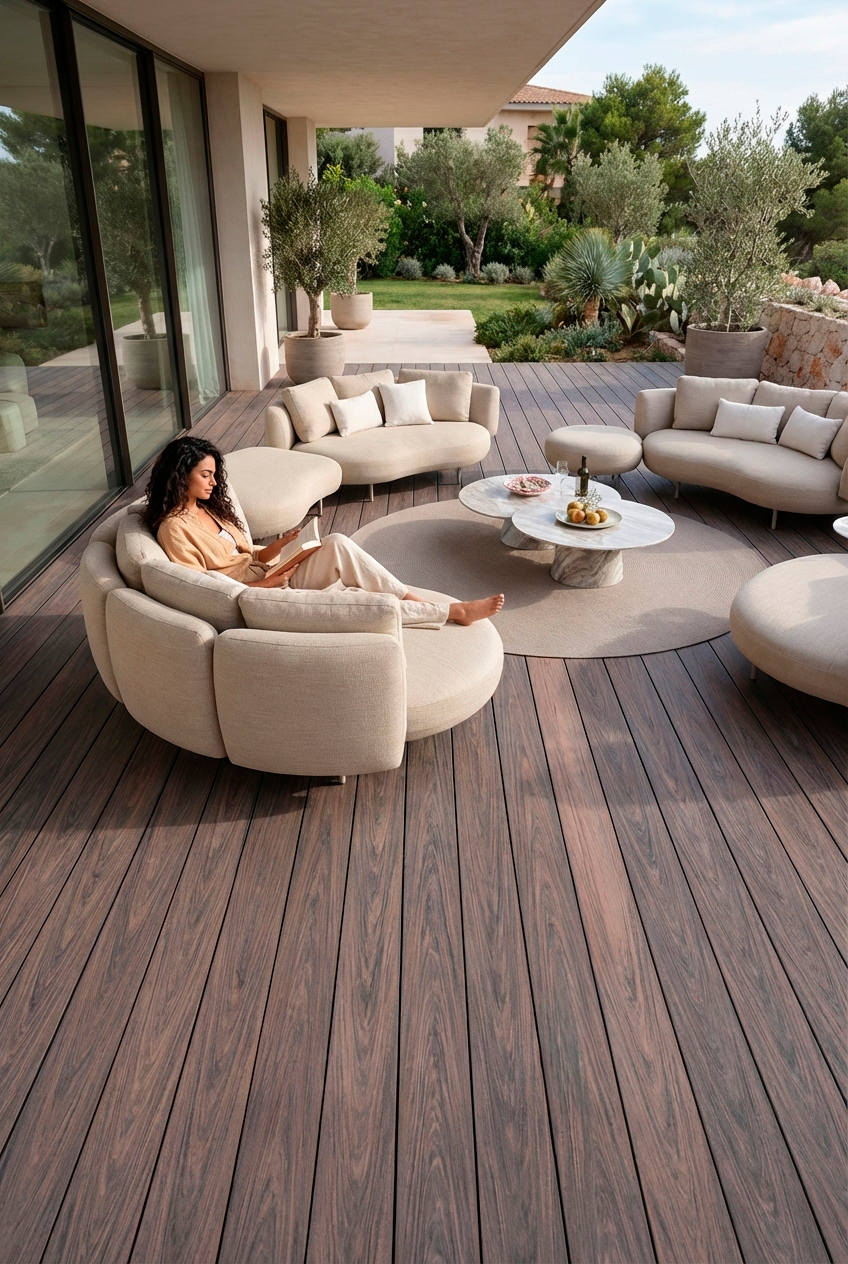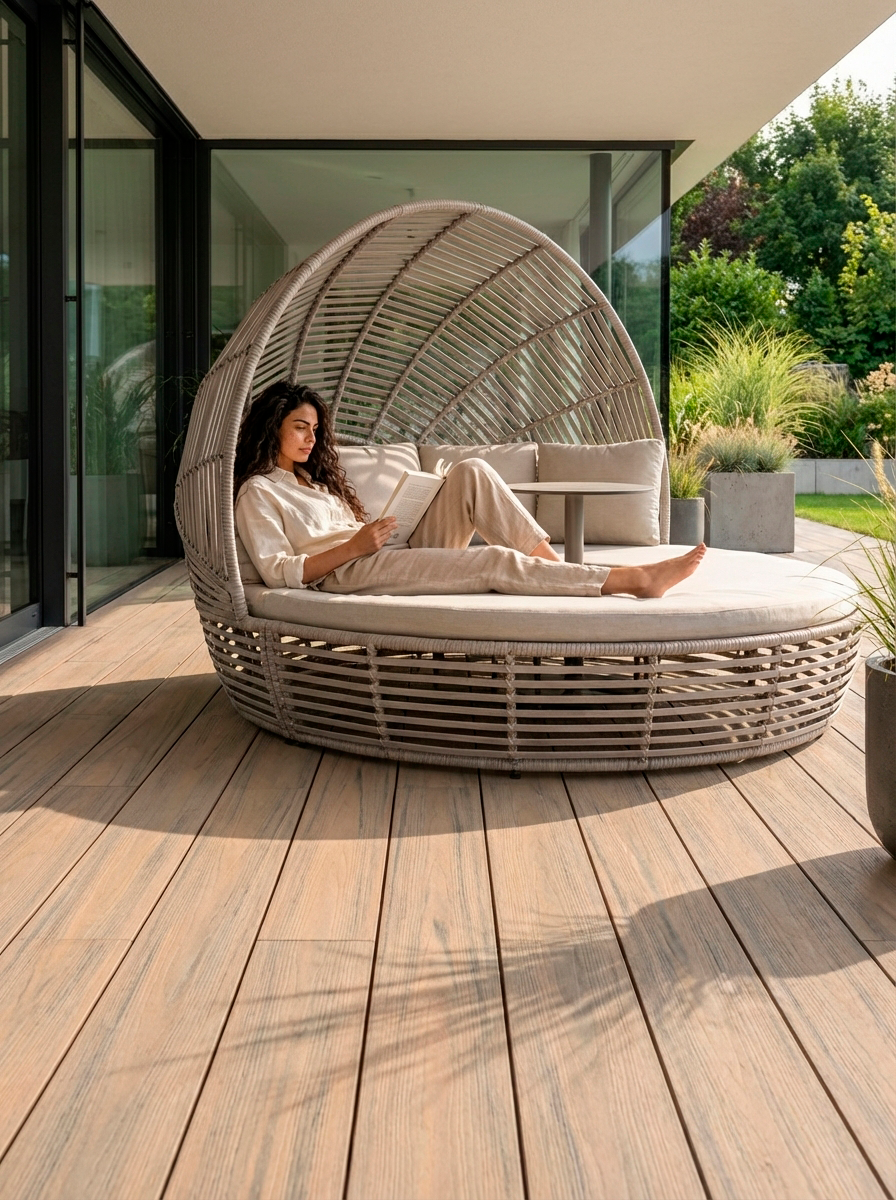



Choosing the right decking board is essential to creating an attractive and functional deck. There are many types of decking boards and a variety of materials from which they are made.
How to Choose Decking: Types, Materials, Pros and Cons
In this article, we will explore how to choose the right decking, examine various types and materials, and analyze their advantages and disadvantages to help you make an informed decision.
Types of Decking Materials
-
Natural Wood: The classic and most common choice. It offers natural beauty, unique textures, and a timeless look. Available in various species such as pine, larch, cedar, and exotic woods. It is prized for its organic feel and the ability to change its shade using oils or stains.
-
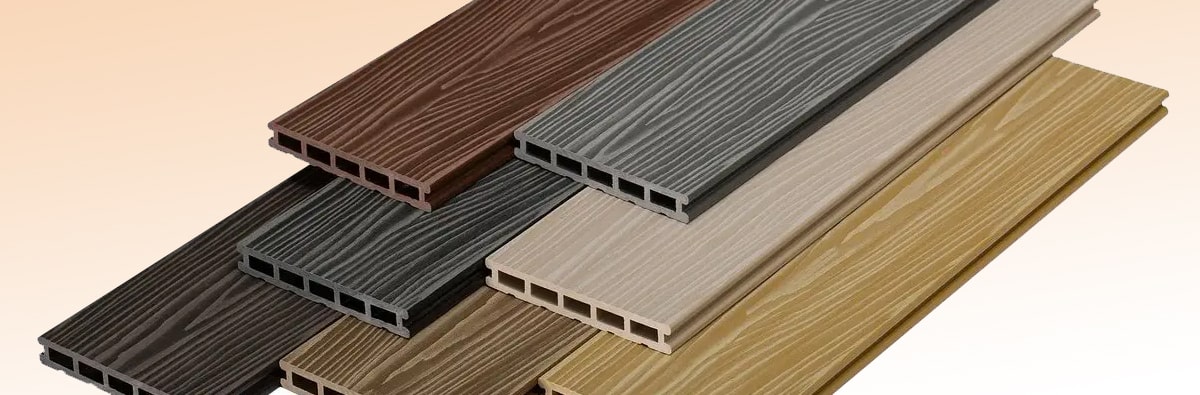
Wood-Plastic Composite (WPC): A modern and popular alternative made from a blend of wood fibers and polymer resins. WPC is known for its high strength, dimensional stability, and resistance to weather, moisture, rot, and insects. It comes in many colors and textures that mimic real wood without the need for regular painting.
-
Thermally Modified Wood (Thermowood): This is wood that has undergone a high-temperature treatment process. It boasts excellent resistance to moisture, decay, and insects. Thermowood is stable under temperature fluctuations and maintains its shape for a long time with minimal maintenance.
-
Exotic Hardwoods: Species like Ipe, Cumaru, and Garapa are premium choices. They are incredibly dense, naturally resistant to moisture and rot, and provide a luxurious, unique appearance. While they may require specific maintenance and are higher in price, they create a stunning high-end look.
-
Plastic (PVC) Decking: Usually made from polyvinyl chloride, these boards offer a simple and budget-friendly solution. They are completely impervious to moisture and insects and require no painting, though they may lack the aesthetic depth and strength of other materials.
Comparison of Advantages
Natural Wood
-
Authentic and unique aesthetic.
-
Pleasant, natural tactile surface.
-
Customizable appearance through stains and oils.
-
Natural heat and sound insulation.
-
Eco-friendly and renewable source.
Wood-Plastic Composite (WPC)
-
High durability and dimensional stability.
-
Excellent resistance to UV, moisture, and pests.
-
Low maintenance (no painting or sealing required).
-
Wide range of colors and wood-like textures.
-
Easy installation with hidden fastening systems.
Thermally Modified Wood
-
Superior resistance to rot and moisture.
-
Maintains structural integrity and shape over time.
-
Natural wood look with enhanced stability.
-
Resistant to extreme temperature swings.
Exotic Hardwoods
-
Luxurious and exclusive appearance.
-
Extreme hardness and weather resistance.
-
Natural immunity to decay and insects.
-
Increases property value with a premium finish.
Plastic (PVC)
-
100% moisture and rot resistance.
-
Maintenance-free.
-
Affordable and accessible.
-
Lightweight and easy to handle.
Potential Drawbacks
-
Natural Wood: Requires regular maintenance (staining, sealing); susceptible to rot and pests if neglected; may warp over time.
-
WPC: Can look less "natural" than real timber; cheaper versions may be less durable; can fade slightly under intense sunlight.
-
Thermowood: Generally higher cost than standard softwoods; can be more brittle than untreated wood.
-
Exotic Hardwoods: High initial investment; requires specialized tools for installation due to density; limited availability of certain species.
-
Plastic (PVC): Artificial appearance and feel; less structural rigidity; can expand and contract significantly with heat.
Conclusion
Your choice depends on your aesthetic preferences, budget, and how much time you want to spend on maintenance. Natural wood offers unrivaled beauty but demands care. WPC provides the perfect balance of durability and convenience. Thermowood and Exotic woods are ideal for those seeking premium performance and style.
Take the time to evaluate these factors, and consider consulting with a professional to ensure your new terrace remains a beautiful and functional part of your home for years to come.